
Criminal disclosure · CPIA 1996
Schedules you can stand behind.
Review unused material — documents, audio, body-worn video and CCTV — record every decision, and release only what you meant to, with continuity from collection to disclosure.
What the law asks
Under the Criminal Procedure and Investigations Act 1996, the prosecution must disclose material that “might reasonably be considered capable of undermining the case for the prosecution against the accused or of assisting the case for the accused” (section 3). The Attorney General's Guidelines on Disclosure (2024) and the CPS Disclosure Manual set out how digital material should be examined, scheduled and recorded.
The government's July 2026 response to the independent review of disclosure expects AI used in disclosure to be ‘auditable, evidence based and capable of effective scrutiny’. See also CPS Disclosure Manual chapter 30 (updated June 2026) and the Attorney General's Guidelines (2024), Annex A.
Where it goes wrong
Body-worn video sits in a “complete” file that nobody has watched.
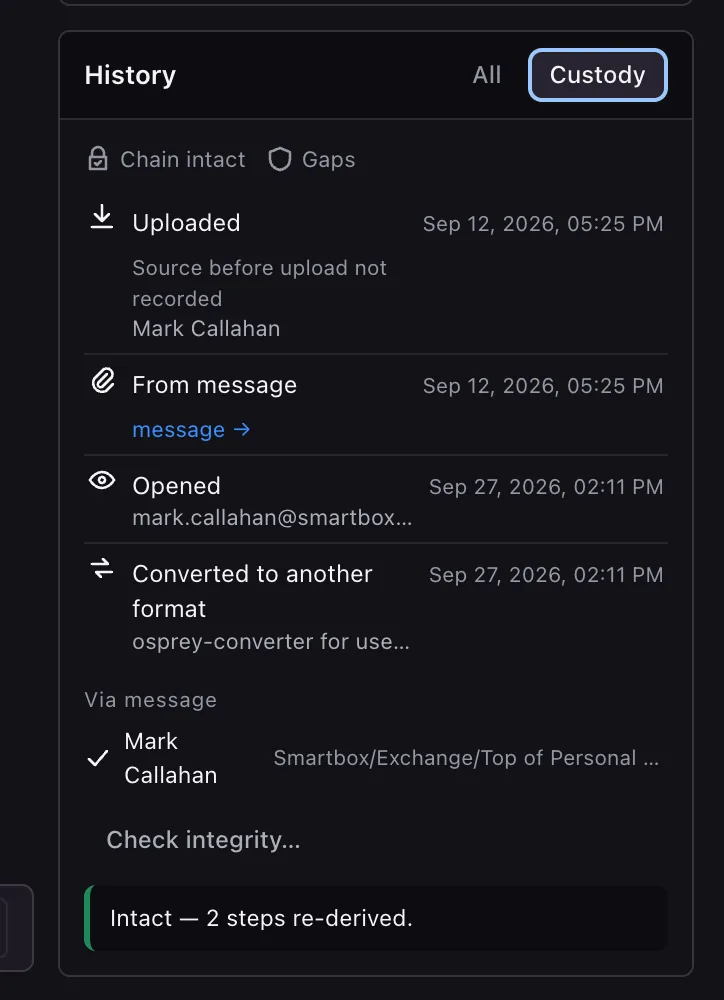
Continuity breaks between collection and disclosure.
How Smartbox handles it
Different regimes. The same four steps.
Discover
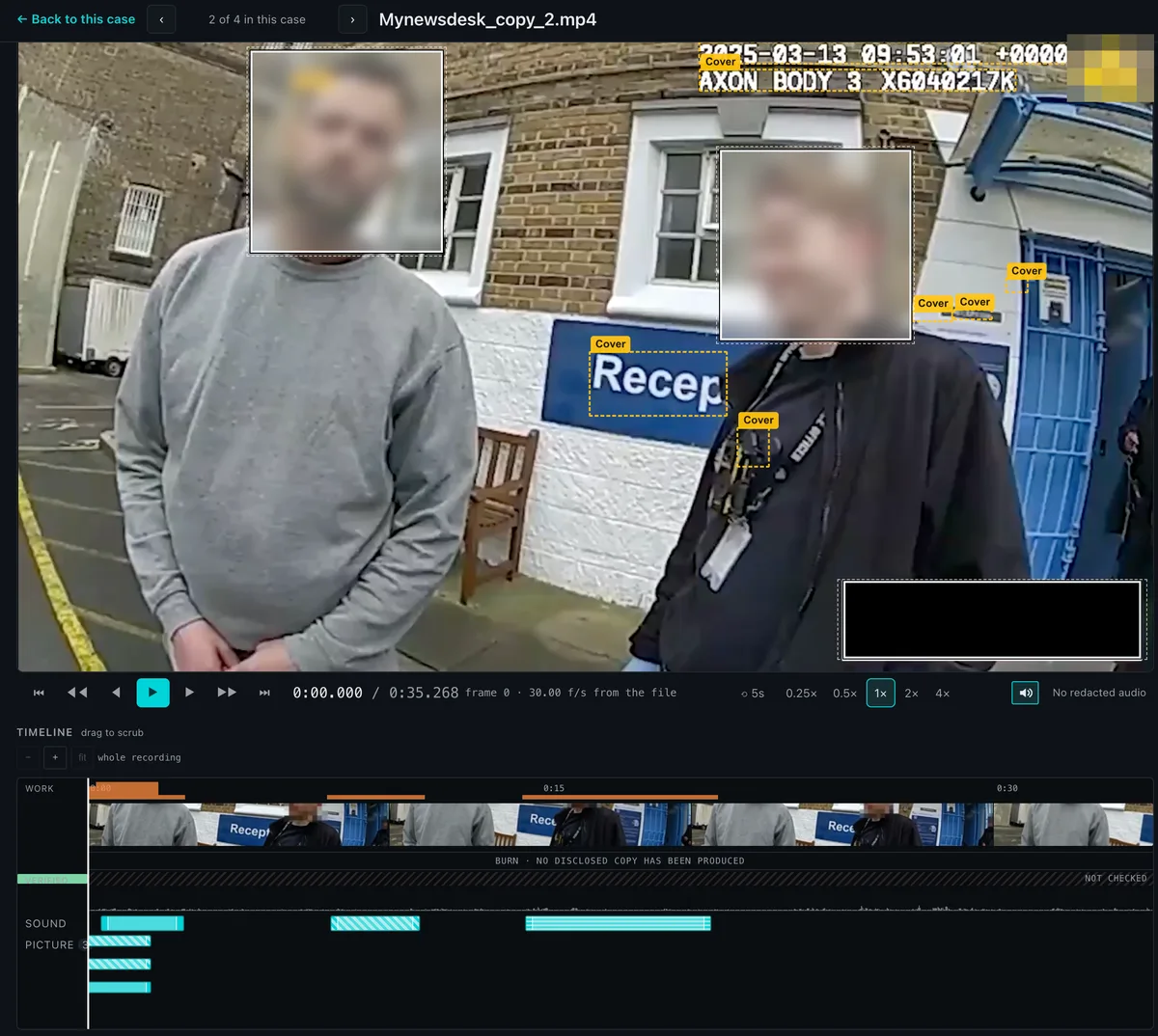
Take in forensic images, documents, audio and video — including body-worn video and CCTV — with continuity recorded from collection; recordings are transcribed with speakers separated.
Decide
Each decision is recorded with its basis and the person who made it.
Act
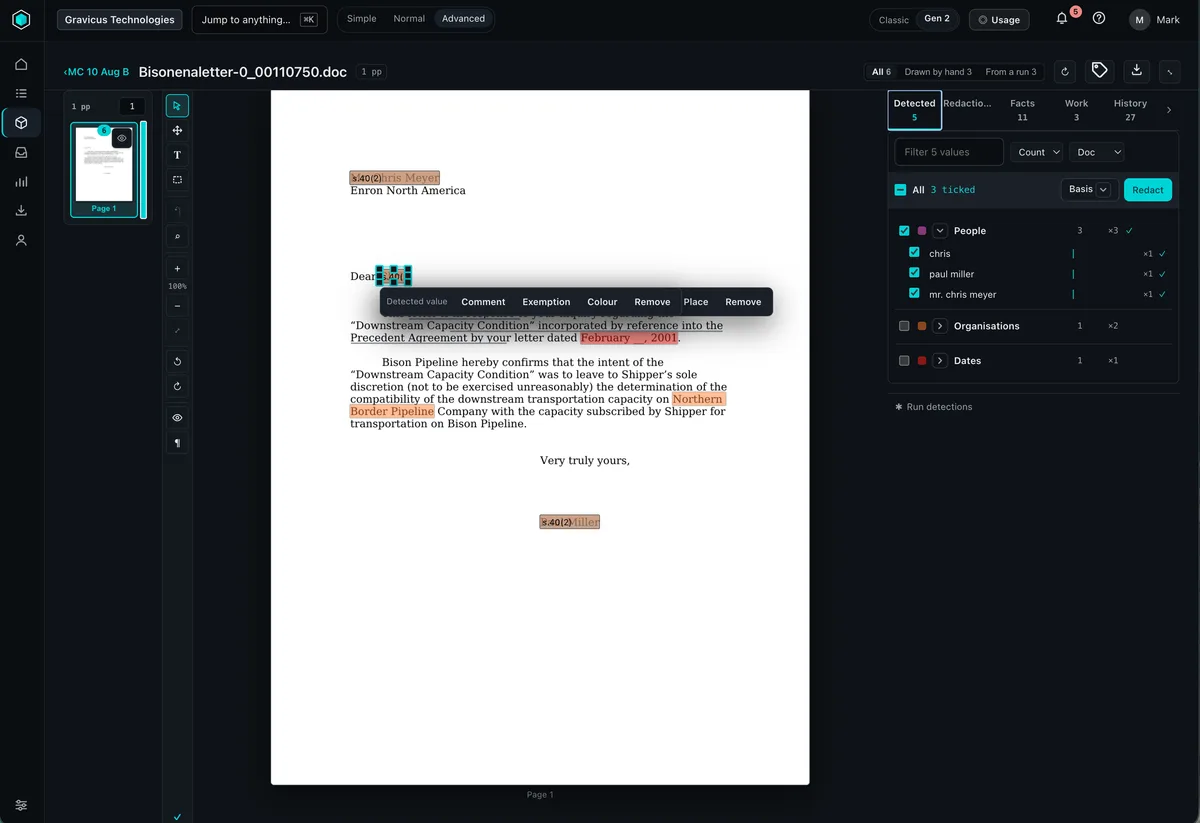
Redact documents and recordings — sound and picture separately — and check before release.
Prove
Continuity end to end, and one controlled way out.
Bring a real criminal disclosure case to a demo.
What you can show afterwards
- Video redaction that holds.
- Continuity end to end.
- One controlled way out.
Questions
Can Smartbox handle body-worn video and CCTV?
Yes. Recordings are transcribed with speakers separated, and sound and picture can be redacted separately.Where does AI fit?
Search and detection are reproducible — the same input always gives the same result — and every decision is made and recorded by a person.
Beta open now · General availability January 2027
Take control of your next case.
Join the Gen 2 beta, or see it working on your kind of material in a 60-minute demo.
